

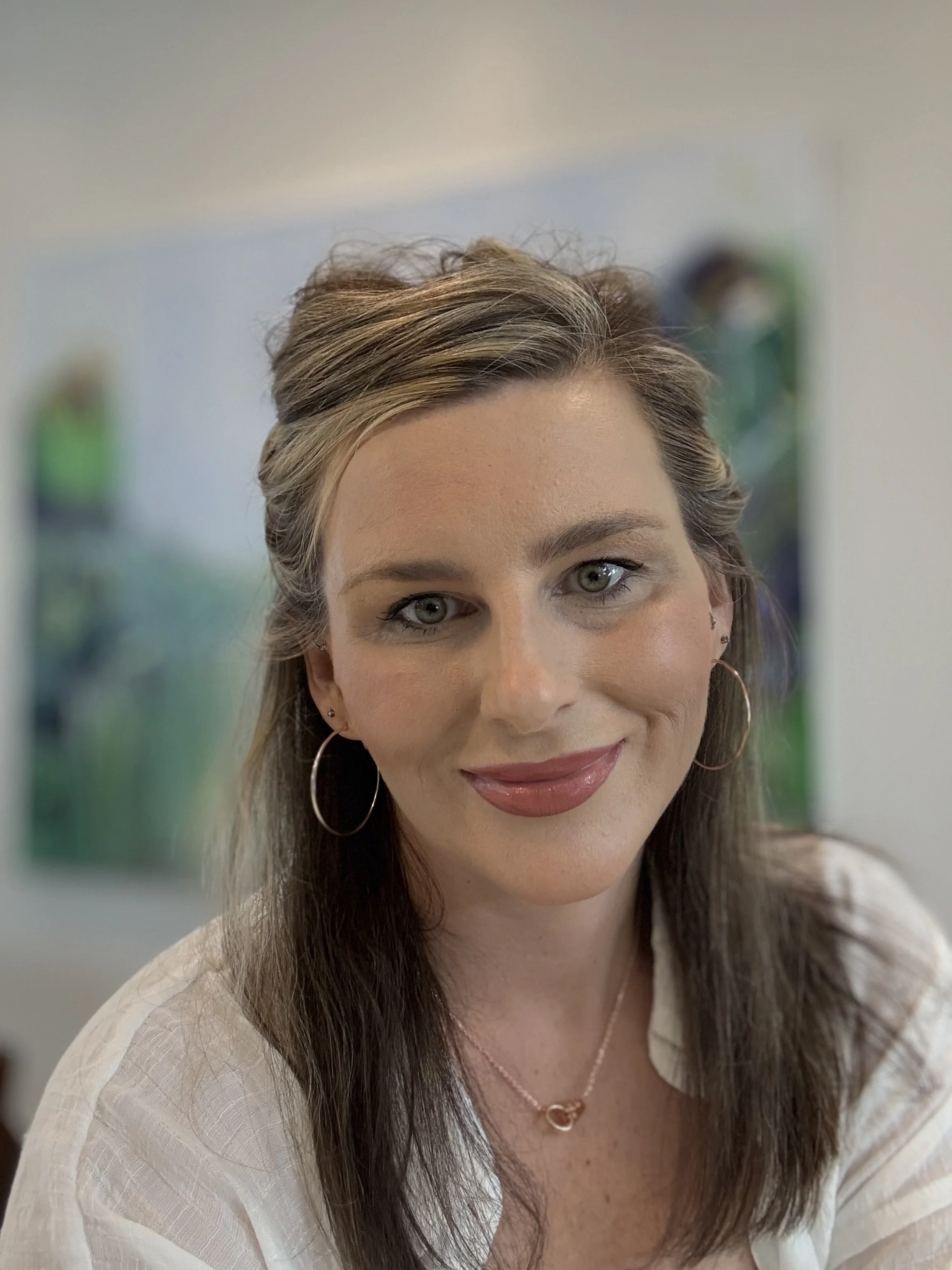
Michelle Puerner, LCSW
OCD and complex anxiety, for clients ages five and up, across Montana and Colorado.
Most of the people I work with have tried therapy before. They have read the books, done the worksheets, talked through what they think the problem means. And the cycle is still running.
OCD and complex anxiety often do not respond to general approaches. The intrusive thoughts, the rumination, the reassurance seeking, the avoidance, the sense that something is not quite right. These are not surface symptoms to be talked away. They are patterns with a function, and treatment has to match how the problem actually works.
That is what I do.
Who I Work With
I see children ages five and up, teens, and adults. Many of my clients arrive carrying intrusive thoughts they have never said out loud. Harm thoughts. Sexual thoughts. Religious or moral thoughts. Thoughts that feel completely at odds with who they are.
Others are caught in cycles of checking, rumination, mental review, perfectionism, health anxiety, or avoidance that has taken over hours of the day. Some have been told they have generalized anxiety when the actual driver is OCD. Some have a tic disorder alongside their anxiety. Some have a trauma history that shows up now through shutdown, compulsion, or hypervigilance rather than through flashbacks.
I work with all of it, including the overlap with eating concerns, somatic symptoms, and complex family dynamics.
How I Work
My approach starts with a functional question: what is this behavior doing for you? Rumination, reassurance, and avoidance all offer short-term relief while keeping the cycle going. Treatment targets what keeps the symptoms going, not the content of the thoughts themselves.
Sessions are active. You will not just talk about the problem. We will identify what is maintaining it and practice responding differently, both in session and between.
I draw primarily on Exposure and Response Prevention (ERP), inference-based CBT, and Acceptance and Commitment Therapy (ACT) for individual work. For tics, I use Comprehensive Behavioral Intervention for Tics (CBIT). The choice of approach is matched to how your specific patterns work, not applied as a one-size protocol.
Working with Families
Anxiety and OCD rarely affect only one person in a family. Over time, reassurance, avoidance, and accommodation become woven into the daily rhythm of a household. Parents end up shaping their behavior around their child's anxiety, often without realizing how much.
When I work with children and adolescents, parent involvement is part of the treatment. Decades of research and my own clinical experience both point to the same thing: changes at home are often what support a young person's progress. How that involvement is structured depends on your child's age and what fits your family.
For younger children, I weave parent work directly into sessions so we are all working on the same patterns at the same time.
For adolescents, there are a few possible paths. Parents can attend my SPACE workshop alongside their teen's individual therapy. I can refer parents to another SPACE-trained clinician for their own parallel work. Or I can work directly with parents while their teen sees another clinician for individual therapy.
I use two complementary frameworks for this work: SPACE (Supportive Parenting for Anxious Childhood Emotions), developed by Dr. Eli Lebowitz at Yale, and Family Well-Being Consultation, developed by Dr. Alec Pollard. SPACE targets specific accommodation patterns that maintain anxiety. Family Well-Being Consultation takes a broader view of how the whole family system has organized itself around managing distress. In many families, I use both. I also offer Family Well-Being Workshops depending on the needs of your family.
Read more: SPACE and Family Well-Being: Which Approach Fits Your Family?
When a Young Adult Will Not Engage in Treatment
Some of the hardest situations I see are families with an older adolescent or young adult who is struggling, sometimes severely, and will not seek or engage with help. Patterns like withdrawal into the bedroom, refusal to attend school or work, escalating accommodation around food or rituals, or a slow drift into dependency that no one knows how to interrupt.
These situations are often called "failure to launch," though the more useful question is usually what is keeping the pattern in place and what the parents can change even when their child will not.
This is where Family Well-Being Consultation tends to be especially relevant. The focus is on helping parents step out of unhelpful interaction patterns, reduce accommodation, and regain influence, without forcing the loved one into treatment and without escalating conflict. This work is meaningful for families navigating OCD, anxiety, ARFID, emotional shutdown, or a young adult who has become stuck in withdrawal.
What I Bring to This Work
I bring both clinical training and lived experience. I understand how OCD can distort values and create constant doubt about whether you can trust your own mind. My role is to stay steady and help you respond differently to that uncertainty rather than getting pulled into the content of it.
I also live with Tourette's syndrome. That is part of why tic work matters to me clinically and part of why I trust that behavioral change is possible even with patterns that feel automatic.
Earlier in my career, I worked primarily as a trauma therapist. Many of my clients still carry trauma histories, but our work focuses on how those experiences show up in the present through avoidance, compulsion, and shutdown patterns. If you are seeking intensive trauma processing such as EMDR or somatic work, I am happy to help connect you with a therapist who specializes in those approaches.
I also provide consultation and training for clinicians and treatment teams, particularly on OCD assessment, treatment planning, and identifying the reinforcement patterns that keep symptoms going.
About the Practice
I founded Adaptive Therapeutic Solutions, PLLC in 2014, which holds the clinical and insurance contracts for my therapy work. The Anxiety Break is where the focused OCD, anxiety, and family work lives, including workshops, coaching, and consultation. Different names, same clinician.
A Bit More About Me
Therapy is a relationship, so here is a little about me outside the therapy room.
When I am not working, you will probably find me riding my motorcycle, snowboarding, listening to music, or traveling. I share my life with two dogs, Olive and Fig, who occasionally make appearances during telehealth sessions.
I believe in deep friendships, strong coffee, and living authentically even when it feels uncomfortable.
Where I Work
I see clients exclusively via telehealth from my home office in Kalispell, Montana. All sessions are conducted through a secure, HIPAA-compliant Zoom platform. I provide therapy to clients located in Montana and Colorado. Coaching and consultation through The Anxiety Break are available nationwide.
Details
Time zone: Mountain Standard Time
Virtual office link: Always the same for every session. I like to keep things simple and consistent.
Payment, insurance, and availability: See Fees & Service Models
Good therapy isn’t just connection. It’s science.
Every tool I use has been chosen for a reason. My work is rooted in evidence-based methods, refined through advanced training, and shaped by years of real-world experience with complex cases. Below is my education and professional training, the foundation behind the strategies we’ll use together.
Education
2011 – Walla Walla University, Master of Social Work
2005 – Montana State University, B.S. in Sociology (Justice Studies emphasis) with a minor in History
Licensures, Certifications, and Professional Leadership
Licensed Clinical Social Worker (2013- present)
International OCD Foundation Member (2021-present)
Treasurer, Montana IOCDF Affiliate (2026-present)
Family Well-Being Consultant (2025)
Montana Sex Offender Treatment Association (MSOTA)
Clinical Member #46 (2014-2024, inactive)
Treasurer (2021-2024)
Association for the Treatment of Sexual Abusers (ATSA)
Clinical Member (2017-2025, inactive)
These affiliations support ongoing connection to specialized clinicians and current research, helping ensure my work remains informed and effective.
Continuing Education & Professional Development
I do my best to stay current with evolving research and clinical techniques through targeted trainings and professional conferences, including:
International OCD Foundation Annual Conference
Body Dysmorphic Disorder Foundation Annual Conference
Select eating disorder–focused trainings
OCD Eating Disorders Special Interest Group (IOCDF ED SIG)
Additional OCD, anxiety, and family systems continuing education
In addition to ongoing education, I’ve sought out in-depth, high-impact trainings that have shaped how I work in the therapy room.
Notable Professional Trainings
OCD, Anxiety, Behavioral, and ACT-Based Work
2026— Cognitive Behavioral Therapy for Chronic Pain, Center for Deployment Psychology
2025 – Next Steps in ACT, 4-Day Intensive, Dr. Lisa Coyne
2025 – Metacognitive Therapy, Dr. Pia Callesen, OCD Training School
2024 – BTTI Pediatric OCD, International OCD Foundation
2023 – Comprehensive Behavioral Intervention for Tics (CBIT), Dr. Douglas W. Woods, TAA
2023 – I-CBT, OCD Training School
2018 – DBT Skills Training, Behavioral Tech Institute
Family Systems & Parent-Based Models
2024 – Family Well-Being Consultation, Dr. Alec Pollard
2024 – SPACE Expanded: Failure to Launch & ARFID, Dr. Eli Lebowitz
2023 – Supportive Parenting for Anxious Childhood Emotions (SPACE), Dr. Eli Lebowitz
Trauma-Informed and Attachment-Focused Therapies
2026 – Prolonged Exposure Therapy (PE) for PTSD, Jenna Ermold, PhD and Kevin M. Holloway, PhD
2026 – Written Exposure Therapy (WET) for PTSD, Denise Sloan, PhD and Brian Marx, PhD
2019 – Emotionally Focused Therapy Externship (EFT), ICEEFT
2018 – Eye Movement Desensitization and Reprocessing (EMDR)
2016 – Cognitive Processing Therapy (CPT), STRONG STAR Training Initiative; instructor: Katy Dondanville, PsyD, ABPP
Forensic Risk Assessment Trainings
2018 – STABLE 2007 & ACUTE 2007 Risk Assessment, Global Institute of Forensic Research
2017 – STATIC-99 Risk Assessment, Global Institute of Forensic Research